
TikTok: @portiaholdsworth
Instagram: @portiaholdsworth
Website: www.portiaholdsworth.com
Agent: Sarah Such
Agency: Sarah Such Literary Agency
Check out our #Agent121 page to book an appointment.
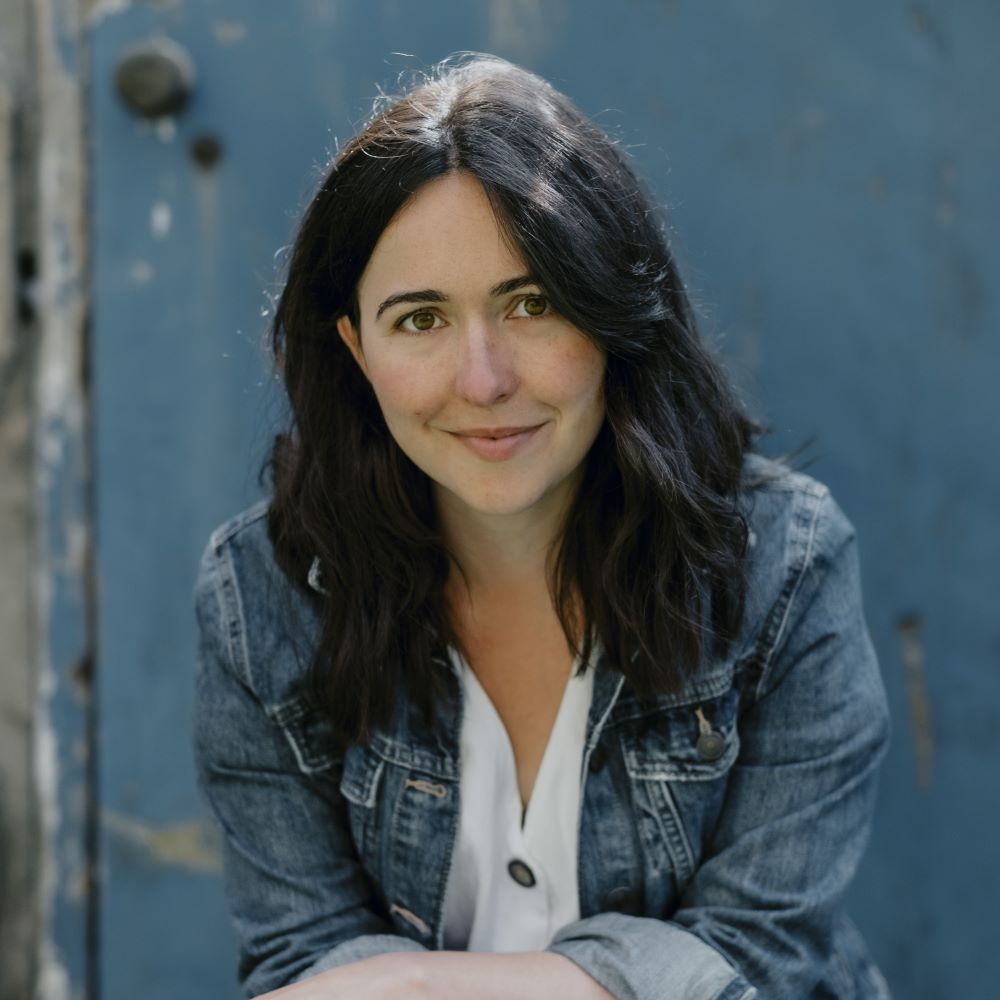
Portia Holdsworth is an author and book editor who lives in Scotland. Following early success as a theatre maker, Portia accepted the role of Deputy Editor of Performing Arts for Blouin Artinfo magazine group, where her in-depth features, interviews and reviews were translated into twelve languages and published around the world. She left the role after contracting a tropical disease, which triggered the disabling condition CFS/ME. Her recovery from severe illness was captured in her personal essays column The Good Life, for Cohorted Cult magazine. Portia’s writing has been performed on BBC radio and stage. Her debut novel, MUCH ADO ABOUT JULIET, was awarded the Highly Commended place in the I Am Writing Historical competition ’25. Portia’s writing has also been longlisted for the Historical Writers Association’s Dorothy Dunnett Competition ’25; longlisted in the Bournemouth Writing Prize ’26; made the inaugural Top 100 of the Ascent Novel Prize 2025/26, and won the Silver Prize for the Athenaeum Writer in Residence Award. She is represented by the Sarah Such Literary Agency, London. Portia’s debut novel, MUCH ADO ABOUT JULIET, is an atmospheric, feminist Shakespeare reimagining.
IAIP: We were so thrilled to receive your email to say you had been agented. Can you tell us how this came about?
PH: Thank you, I’m still on such a high to be at this exciting next stage in my career! It came about after lots of writing, edits, and sending out an initial batch of queries to around fifteen literary agents, which resulted in seven requests to read the full manuscript, if I remember correctly. Two of those agents gave really helpful (and similar) insightful feedback, and both said they would be interested in reading another draft of my novel. I agreed with their points; they were things that in my heart I had wanted to do, but perhaps had been too afraid of, as it felt like a big risk in terms of the book’s positioning. A few months later, following a round of edits, I sent the book back to them, along with submitting it to the next shortlist of agents who I was really keen to be considered by. Not long afterwards I had an email from an agent telling me she was loving the book and wanted to set up a video call to chat. I was standing on the platform of King’s Cross station, on a trip to London to visit the Globe Theatre (and to see Magic Mike with the girls, if I’m being totally honest!), when I received the email—it was such a pinch me moment. We arranged the call for the following week, on the 23rd April, which meant I ended up getting my first offer of representation on Shakespeare’s birthday; my novel is a love letter to William Shakespeare’s plays, so this felt really special.
A hugely exciting, whirlwind few weeks followed my first offer. I emailed all the agents who were still considering my book to let them know that an offer was on the table, and I gave them a deadline to come back to me by if they were interested too. I received a further flurry of requests for the full manuscript, lots of bargaining over whether I could extend the deadline, and ended up with three offers on the table. I signed with my brilliant agent, Sarah Such, because on our first call together it was clear that not only is she whip-smart, but we shared a similar vision for this book and my future author career. It really felt like she understood me as a writer, which I think is incredibly important when you are going into what is essentially a creative business partnership with somebody. Sarah has been shortlisted for Literary Agent of the Year four times at the British Book Awards (the ‘Nibbies’), including this year, and in her latest nomination it was noted that she does good deals and gives excellent client care, so I knew I was in great hands.
IAIP: Was this the first book you had written and completed?
PH: I wrote a literary memoir before this, which I began at eighteen and was working on alongside my career as an arts and travel journalist. But then I went through a really severe illness in my twenties and spent many years bedbound, then housebound with it—it threw my life plan totally out of the window. The memoir isn’t about that time, but as I had to learn to read, write and walk again, completing that first book became a major health goal for me. I was determined to be well enough to finish it. I learnt so much from my recovery about perseverance, patience, and trusting that small steps can get you where you want to go. I’m not sure if I would ever have finished writing a book without that difficult period of my life; it taught me that I have the necessary tenacity for wading through long-haul, difficult things. I’m glad it had some gifts, because it is certainly not a time I would ever want to repeat! I did send my finished literary memoir to a handful of agents a few year back and was lucky to have a lot of full requests and strong interest, including an R&R, but ultimately I decided not to pursue the project further, as it felt too exposing once agents started reading it and I realised that if it went on to be published other people would read it too! After that experience I was very happy to work on fiction and get to hide parts of myself amidst my characters instead. The book I have just been signed for, MUCH ADO ABOUT JULIET, is the first novel I have written.
IAIP: What was your inspiration behind the book that secured your agent?
PH: My novel, MUCH ADO ABOUT JULIET, is a subversive, feminist love letter to Shakespeare. Set in vibrant late-Renaissance Italy, we follow a young, impoverished and love-scorned Beatrice (Much Ado About Nothing), as she comes face-to-face with a mysterious lookalike and is shocked to discover that it is the reclusive, wealthy heiress of Verona, Juliet Capuleti (Romeo & Juliet): for one star-crossed week Shakespeare’s iconic heroines agree to switch lives and each of their fates are changed forever…
I would say my book is perfect for anyone who is a fan of the film Shakespeare in Love (one of my favourite movies), though my novel has a slightly darker edge.
I was named after one of Shakespeare’s heroines and I grew up partly around Stratford-upon-Avon, with my Nan being a playwright and my step-grandparents actors at the RSC (Royal Shakespeare Company), so the Bard has always been a big part of my life. I had a lot of fun as a teenager directing Shakespeare plays at professional theatres as part of international festivals, and I was lucky enough to catch the eye of a Shakespeare team at the BBC. This led to my career as a performing arts deputy editor at a big magazine, so when I decided to write a novel I knew it had to be inspired by the Shakespearean stories I love. Originally, I was going to write a really dark and luscious literary retelling of Romeo and Juliet, but at the time of playing with ideas for the first draft in my notebook, I was also considering adopting a child. I was journalling across the same pages about sibling separation in adoption and Juliet’s backstory, when the two things converged, giving birth to the idea for my book. I didn’t continue on the adoption path, but my story about strangers who share a face—and the secrets and scandals that spill from them meeting—came to life. So many of William Shakespeare’s plays have characters stealthily swapping identities, that it felt like the perfect homage to his works.
IAIP: We know that you did an #Agent121 session. How do you feel that it helped?
PH: The agent I spoke to during my Agent121 was so lovely. She gave me confidence going into the querying process that my writing, concept and pitch were all where they needed to be – she told me that all the components were there for my project, so it would simply be a matter of taste, space on an agent’s list, and the market, when it came to agents deciding if they would like to read more. This was a real confidence boost. She also asked to read my full manuscript when it was ready (I was in the middle of a ‘final’ draft when I had the 121 call). This was very motivating to finish edits, and helped me when submitting to other agents, as I was able to tell them that the book already had a full request, which meant some read my submission sooner than they might have otherwise. Publishing is notoriously slow, and everybody is incredibly busy, so it really is a golden opportunity to be able to have an Agent121 and know an industry professional is going to be considering your query package. The agent I met with emailed me back and forth a number of times after that, and she asked to see early pages from my next project too, so it really was an incredible opportunity to make a connection. I work as a book editor and book coach alongside my own writing, and I recommend I Am in Print’s Agent121 sessions to writers all the time.
IAIP: Roughly how many rejections did you receive before becoming agented?
PH: Plenty. I’ve had two rejections arrive in my inbox since I signed with my agent, from other literary agents who I had queried yonks ago. For both books I have queried I sent out two versions of the pitch to each batch of agents, so that I could treat it as an experiment in which pitch was landing best. This stopped early passes feeling like rejections—they were just helpful data on what was or wasn’t working. The rejections which stung the most were from agents who were really enthusiastic about my book, took months to consider the full manuscript and then came back to tell me they had been really torn over it and almost signed me, but ultimately decided they weren’t quite the right fit. Rejection is part of the game, but I think the emotional rollercoaster of getting close to an opportunity, it being a no, and then having to convince yourself to still believe it could happen with the next person, is really tough. I’ve actually just heard Diana Gabaldon speaking at the Edinburgh International Book Festival, where she shared that there were many times, spanning decades, when her Outlander books were optioned for screen adaptations and made it to various stages, but ultimately didn’t finish production. She pointed out that drama series on TV, and of course streaming services, weren’t a thing for a lot of that time, so the right vehicle for her book series to be adapted just wasn’t there. Now we have the award-winning TV show fans love, and that is thanks to Diana and her team staying open to further opportunities. Listening to her, I just kept thinking about how important it is not to let our brains assume that something not coming off right now, means that it never will. Often in life and literature things happen when the time is right.
IAIP: What have you learned about the publishing industry since you began your novel writing journey?
PH: First and foremost that publishing is full of truly lovely, generous people—and that, unfortunately, everybody is stretched to their limit. I love how female dominated the publishing industry is, and I think there is a real sense of human care that comes through in conversations you have with industry professionals. Everybody gets really excited about a great book, or standout writing voice, and there is a real sense of everyone pulling together to try and bring a book to the shelves.
IAIP: What advice would you give to aspiring writers looking to find an agent?
PH: I think the work truly begins before you ever put the first words on the page. I definitely learnt from pitching my first project, the memoir, how important it really is to have a clear elevator pitch for your book, no matter what genre you are writing in. The one line pitch is used by agents, editors, marketing, sales departments, booksellers, and readers pressing your novel into other people’s hands as they say, ‘you need to read this!’. I had this in mind when writing the first draft of MUCH ADO ABOUT JULIET, as I wanted to know it was an idea I could easily convey to others. If somebody was to ask you in a busy bar what your book is about, could you quickly explain the premise clearly enough that they could visualise the vibe and story? Beyond that, my advice would be, once you’re querying, don’t be afraid to politely follow up with agents—the power balance can feel really skewed away from authors at that stage, but ultimately you are two professionals who will each benefit from working together, so it’s fine to appropriately check in. Of course, if their guidelines are clear on when you will hear back from them and that time has passed, then respect this, but it made a big difference to my querying journey not being afraid to update agents with news of prize listings, other full requests etc.
IAIP: Do you have any tips on making the most of an #Agent121 or from entering a writing competition?
PH: In terms of making the most of an agent121, I would prepare some questions ahead of the call. Don’t be afraid to get specific; are there any other comparison titles they think would work for your project that you haven’t thought of? Did the ending feel satisfying to them after reading the synopsis? In an earlier draft you had character X doing Y, was that a stronger premise? How would they pitch this book? I would open by asking the agent if they had any general feedback first, then fire off your questions if they haven’t covered the answers already. And most importantly, remember, this is also a chance for you to make a good impression—be polite and professional.
The only tip I really have for competitions is to enter ones that have a good reputation, and even better if they are also specific to your genre. My novel is set in late-Renaissance Italy, and amongst other prizes, I was Highly Commended on the shortlist for the I Am Writing Historical competition, ran by I Am in Print in 2025, and I’ve also been longlisted for the Historical Writer’s Association’s Dorothy Dunnett Competition ’25. I think you have a better chance of doing well in genre specific competitions than general novel-writing ones, because the judges are looking for stories like yours. This is why the I Am in Print competitions are wonderful, they give so many writers opportunities by being genre defined. All that said, although listing in a well-respected writing competition can bring opportunities, I wouldn’t say it is anything to stress about if you haven’t placed in any—as a book coach I see plenty of writers land agents without anything sparkly in their writing bio, and winning prizes doesn’t guarantee your book will be signed. Ultimately finding an agent is largely about alchemy.

TikTok: @portiaholdsworth
Instagram: @portiaholdsworth
Website: www.portiaholdsworth.com
Agent: Sarah Such
Agency: Sarah Such Literary Agency
Check out our #Agent121 page to book an appointment.